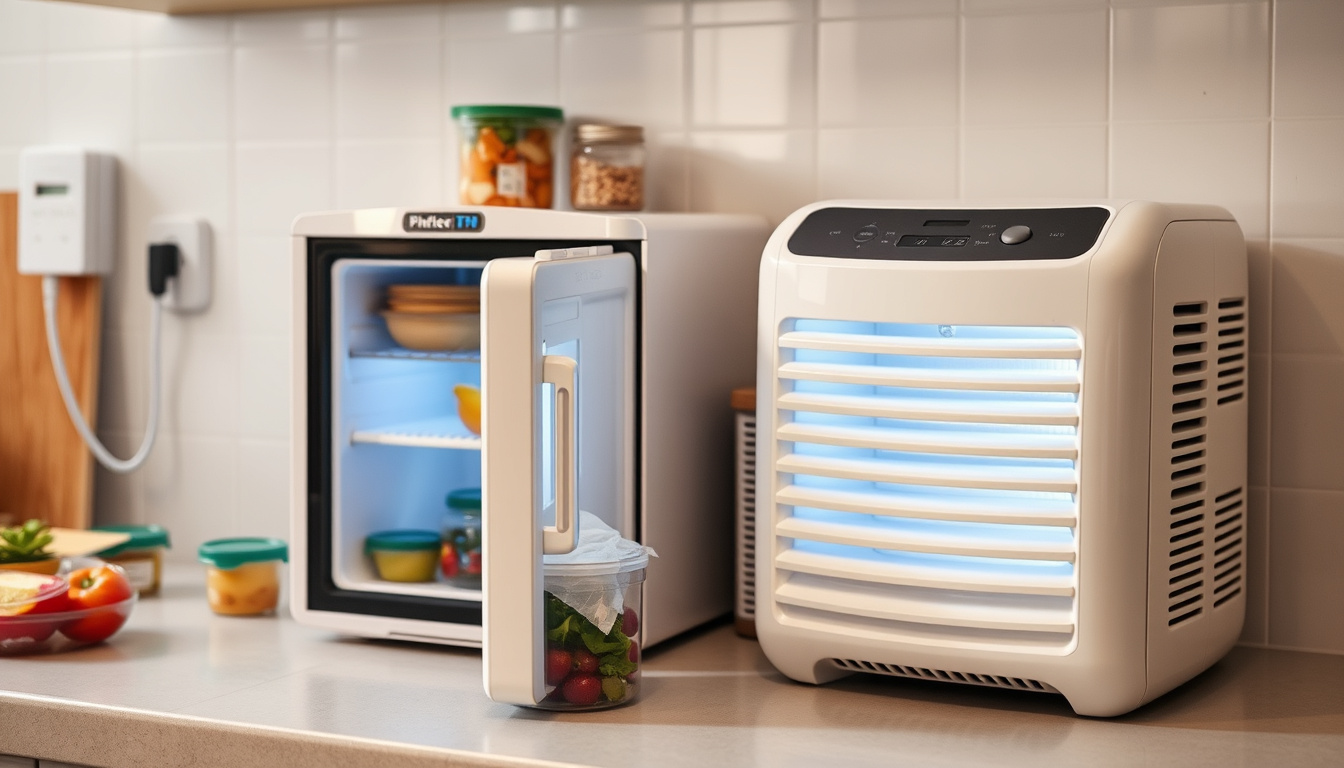
Anyone who’s tried to squeeze a full-size fridge into a cramped student flat or home office already knows the appeal of a mini fridge. These compact coolers have become a staple in Irish bedrooms, dorm rooms, and small kitchens, offering convenience without hogging space. But choosing the right one and using it safely takes a bit of know-how—this guide walks through the practical essentials for Irish buyers in 2025.
Typical Mini Fridge Price: €120 – €500 (Ireland) ·
Annual Electricity Cost: €15 – €40 ·
Average Capacity: 20 – 50 litres ·
Common Locations: Bedroom, Office, Dorm Room ·
Retailers in Ireland: Currys, Heavins, Harvey Norman, Amazon
Quick snapshot
- Mini fridges require good airflow and a flat surface (Mini Fridges Ireland (Irish retailer))
- EU energy labels for fridges now use an A-to-G scale (Harvey Norman Ireland (Irish appliance retailer))
- Exact annual running cost varies by local tariff and model
- Long-term reliability of newer budget models is not well-documented
- White vinegar as a mold killer is widely recommended but not formally tested for all fridge types
- March 2021: EU energy-label reform replaced A+++/A++/A+ classes with new A-to-G scale (Harvey Norman Ireland)
- Irish buyers should look for models with noise class disclosure (A-to-G) under new label rules (Harvey Norman Ireland)
Key facts at a glance
An overview of the fundamental characteristics of mini fridges in 2025.
| Attribute | Value |
|---|---|
| Average Price | €120 – €500 |
| Annual Running Cost | €15 – €40 |
| Typical Capacity | 20 – 50 litres |
| Common Brands in Ireland | Logik, Russell Hobbs, Cookology, Mobicool |
What is a mini fridge good for?
Best uses in a home
- Storing drinks, snacks, and small perishables in a home bar or entertainment area.
- Serving as a secondary fridge for overflow items in a busy household.
- Keeping baby bottles or medications at a consistent cool temperature.
Mini fridges are most at home in a bedroom, home office, or small apartment, according to Mini Fridges Ireland (specialist retailer). They are also popular in dorm rooms where space is tight and a full-size fridge isn’t practical. If you’re planning a larger kitchen update, you might also want to check out our Kitchen Cabinets Ireland: Buy vs Build Cost Guide 2026.
Best uses in an office
A compact fridge in a workplace keeps lunches fresh and drinks cold without the walk to a shared kitchen. Harvey Norman Ireland (Irish appliance retailer) markets under-counter fridge-freezers specifically for office and apartment use.
Best uses in a dorm room
- Perfect for snacks, leftovers, and soft drinks.
- Many cube-style models under €200 are lightweight and easy to move (Good Housekeeping (consumer testing publication)).
For Irish students, a mini fridge pays for itself in convenience: no more midnight trips to the communal kitchen, just a cold drink steps away from the desk.
The pattern: wherever people need cold storage within arm’s reach, a mini fridge fits. The trade-off is space—you lose a bit of floor area but gain daily convenience.
Do mini fridges use a lot of power?
Average electricity consumption
A typical mini fridge uses 50–100 kWh per year, according to Bonkers.ie (Irish consumer price comparison site). Modern models with better insulation and compressors are more efficient than older ones. Harvey Norman Ireland notes that the new energy labels make it easier to compare consumption at a glance.
Cost of running a mini fridge per year
Annual running costs in Ireland range from about €15 to €40, depending on the model’s energy rating and local electricity rates. Bosch Home Ireland (appliance manufacturer) lists compact models with annual running costs of €23 to €34, showing that energy-efficient choices cut expenses significantly.
For an Irish household running a mini fridge 24/7, the electricity bill adds only about €1.50–€3 per month—less than a single takeaway coffee. The real cost is the upfront purchase, not the ongoing power.
The implication: over five years, even a slightly more efficient model can save €50–€100 in running costs, making the energy label worth checking before you buy.
Where shouldn’t you put a mini fridge?
Places to avoid in a bedroom
- Never place it inside a cupboard or enclosed space—airflow is essential.
- Keep it on a hard, flat surface, not on thick carpet that can block the compressor fan.
- Allow at least 5 cm clearance around the condenser (Mini Fridges Ireland).
Places to avoid in a kitchen
- Away from ovens, radiators, and dishwashers—heat forces the compressor to work harder.
- Not in direct sunlight or on uninsulated walls that get hot or cold.
- Under-counter installation only for models designed with front ventilation (Mini Fridges Ireland).
Places to avoid outdoors or in garages
- Most mini fridges are not rated for unheated garages or outdoor use; extreme temperatures can damage the compressor.
- If you must use one in a garage, choose a model with a wider operating temperature range.
The catch: placement mistakes are the most common cause of poor cooling and early failure. A mini fridge needs breathing room, just like any appliance.
Is a mini fridge in bedroom safe?
Fire risk concerns
Mini fridges are generally safe for bedrooms. The main fire risk comes from daisy-chaining power strips or using damaged extension cords. Plug the fridge directly into a wall outlet, and ensure the plug and socket are not hidden behind furniture where they can overheat.
Noise concerns
Some mini fridges emit a hum or a click when the compressor cycles on. For bedroom use, look for models with a noise rating under 40 dB. Mini Fridges Ireland specifically recommends checking the decibel level for quiet operation in a bedroom.
Proper ventilation for safety
A bedroom mini fridge must have airflow. Keep it at least 5 cm from the wall and never place it inside a wardrobe or alcove. A hard, flat surface helps the compressor fan run freely.
The bottom line: a bedroom mini fridge is safe if you respect its need for airflow and a stable surface.
What not to put in a mini fridge?
Items that spoil faster in a mini fridge
- Leafy greens and fresh herbs tend to wilt faster due to uneven temperature distribution.
- Bananas and avocados ripen poorly in the cold and may develop off-flavours.
- Bread can dry out more quickly in a mini fridge’s dry environment.
Items that can damage the fridge
- Never store opened cans of acidic foods like tomatoes—the acid can corrode the interior metal or seals (Crownful (appliance brand)).
- Carbonated drinks in glass bottles can explode if temperatures fluctuate inside the fridge.
- Unsealed chemicals or flammable materials should never be stored in any fridge.
The takeaway: use your mini fridge for drinks and packaged snacks, not for bulk perishables or risky containers.
Why are mini fridges so expensive?
Cost of components
Mini fridges contain the same core parts as full-size fridges—compressor, condenser, evaporator—packed into a smaller chassis. That doesn’t make them cheaper to produce. Klarstein Ireland (appliance brand) notes that even the smallest 10-litre models require the same refrigeration cycle as a 300-litre unit.
Brand and feature influence
- Features like adjustable shelves, a small freezer compartment, and energy-saving modes raise the price.
- Well-known brands often command a premium for reliability and after-sales support.
- Wirecutter (NYT product review site) found that the Midea WHS-65L offered the best balance of quality and price in its tests.
Comparison to full-size fridge value
A full-size fridge may cost €400–€800 but offers over 200 litres of space. A mini fridge at €200–€500 gives only 20–50 litres. Consumer Reports (independent testing organisation) notes that mini fridges often have a higher per-litre cost than full-size models. The price premium reflects the niche convenience, not better value.
Irish buyers pay a premium for compactness. A €300 mini fridge holds about the same as 30 litres of shelf space in a full-size fridge that costs half that per litre. The convenience of having it in your bedroom is what you’re really paying for.
What this means: if space allows, a full-size fridge offers far better value per litre. But when floor space is limited, a mini fridge is the only practical option.
Specifications: what to look for in a mini fridge
When shopping, keep these typical ranges in mind to find the right fit.
| Specification | Typical Range |
|---|---|
| Capacity (litres) | 15–70 (bedside: 15–20, standard: 40–70) |
| Noise level (dB) | Under 40 dB for bedroom use recommended |
| Energy class (new EU scale) | A to G (A being most efficient) |
| Annual energy use (kWh) | 50–100 kWh |
| Dimensions (height/width/depth) | Varies widely; measure your space first |
| Freezer compartment | Some models include a small freezer; others are fridge-only |
| Installation type | Freestanding or under-counter (ventilation required) |
| Price range | €120–€500 (Ireland) |
Pros and cons of a mini fridge
Upsides
- Compact and portable—fits in tight spaces
- Low annual running cost (€15–€40)
- Convenient cold storage in bedrooms, offices, dorms
- Quiet models available (under 40 dB)
- Can serve as a secondary fridge for drinks or snacks
Downsides
- High per-litre cost compared to full-size fridges
- Limited capacity—not suitable for large families
- Must have proper ventilation; not for enclosed spaces
- Some models are noisy (above 40 dB)
- Budget models may lack durability
What kills mold in a mini fridge?
Step-by-step cleaning process
- Unplug the fridge and empty all contents.
- Remove shelves and drawers and wash them in warm, soapy water.
- Mix a solution of equal parts white vinegar and water, or a tablespoon of baking soda in a litre of warm water.
- Wipe down all interior surfaces with the solution, paying attention to corners and seals.
- Rinse with a damp cloth and dry thoroughly.
- Leave the door open for a few hours to air out completely before restocking.
Natural vs chemical cleaning agents
White vinegar and baking soda are effective and food-safe. Mini Fridges Ireland recommends vinegar for routine cleaning. Bleach kills mold too but must be rinsed very thoroughly to avoid chemical residue.
Mold comes back quickly if the fridge stays damp. After cleaning, keep the door open occasionally and check for leaks. A dry fridge is a mould-free fridge.
The pattern: most mold problems are caused by humidity and spills that aren’t wiped up fast. Regular cleaning every 3–4 months prevents buildup before it starts.
Confirmed facts and what remains unclear
Confirmed facts
- Mini fridges need good airflow and a flat surface (Mini Fridges Ireland).
- They are safe in a bedroom if placed properly (Mini Fridges Ireland).
What’s unclear
- Exact annual running cost varies by local tariff and model.
- Long-term reliability of newer budget models is not well-documented.
- White vinegar as a mold killer is widely recommended but not formally tested for all fridge types.
The upshot: focus on placement and cleaning for the best experience with your mini fridge.
Quotes from the field
“Compact fridges are ideal for bedrooms, offices, and small kitchens. We recommend models under 40 dB for quiet operation in a bedroom.”
“Never store opened cans of acidic foods like tomatoes inside a mini fridge because the acid can corrode the interior.”
— Crownful (appliance brand, general advice)
“A mini fridge in a bedroom is safe as long as it has proper ventilation and is placed on a hard, flat surface away from heat sources.”
— Jackery UK (portable power brand, bedroom safety guidance)
These insights from retailers and brands reinforce the practical do’s and don’ts of mini fridge ownership.
Summary: the verdict for Irish buyers
A mini fridge is a smart addition for anyone in Ireland who needs cold drinks and snacks within easy reach—whether in a student flat, a home office, or a small apartment. The running costs are modest, the safety concerns manageable, and the convenience real. But value for money is poor compared to a full-size fridge: you pay a premium for compactness. For the Irish buyer, the choice is clear: if you have the space for a standard fridge, go that route; if space is tight, a well-ventilated spot with an energy-efficient model will serve you well. For students and remote workers living in a single room, a mini fridge is almost essential—just keep it clean, ventilated, and away from the carpet.
Related reading: **Kitchen Cabinets Ireland: Buy vs Build Cost Guide 2026** · **Millennial Generation: Age Range, Characteristics, Key Traits**
Frequently asked questions
Can I put a mini fridge in a closet?
No—closets lack airflow, causing the compressor to overheat and fail. Always place the fridge in an open area with at least 5 cm clearance.
How do I defrost a mini fridge?
Unplug the fridge, remove all food, and leave the door open until the ice melts. Do not use a knife or scraper—it can puncture the cooling coil.
How long does it take for a mini fridge to get cold?
Typically 2–4 hours for the interior to reach a stable temperature after plugging in. Avoid overloading it immediately.
Can a mini fridge be left on all the time?
Yes—they are designed for continuous operation. The compressor cycles on and off to maintain temperature.
What size mini fridge do I need?
For a single person, 15–40 litres is enough for drinks and snacks. For two people or if you want to store leftovers, consider 40–70 litres.
How do I make my mini fridge more energy efficient?
Keep it away from heat sources, allow airflow, don’t set the thermostat colder than necessary, and defrost regularly if ice builds up.
Is it safe to put a mini fridge on a carpet?
It’s risky—carpet can block the fan on the bottom of the fridge, causing overheating. Place it on a hard, flat surface or use a thin board under the feet.
Related stories




Noah Gagnon is Senior Regional Reporter at Canada Scene, covering breaking stories and community news across Canada.