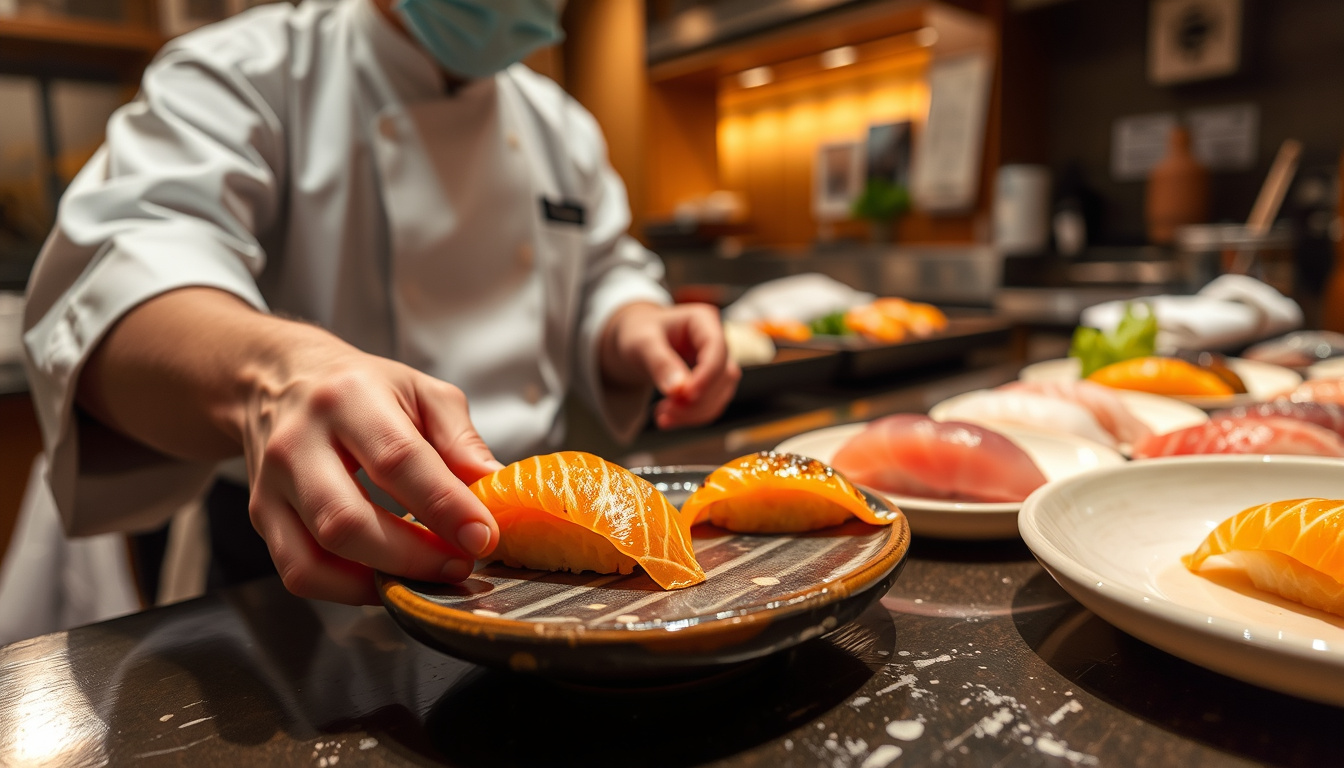

Tokyo is a city where sushi isn’t just food — it’s an obsession. With more Michelin-starred sushi restaurants than anywhere else and a conveyor-belt culture that serves plates for pocket change, the range can feel overwhelming. This guide cuts through the hype, using verified data from the Michelin Guide (Tokyo region) and Tabelog (user-review platform) to show you exactly where to eat, whatever your budget.
Cheapest Michelin-starred lunch: ¥8,800 (Udatsu Sushi) ·
Tabelog exceptional score: 4.0+ ·
Michelin sushi restaurants in Tokyo: 54
Quick snapshot
- Tokyo has 54 Michelin-listed sushi restaurants (Michelin Guide)
- Tabelog’s curated sushi roundup covers affordable to high-end dining (Tabelog Matome)
- Multiple Michelin-starred omakase lunches are available under ¥15,000 (based on Harvard analysis and Magical Trip data) (54 Michelin-listed sushi restaurants)
- Current reservation availability for 3-star sushi restaurants is uncertain
- Which budget omakase is best for first-time visitors remains subjective
- 2024: Michelin Guide Tokyo awards 3 stars to Sushi Yoshitake, Sushi Saito, and Restaurant Kyo Ajimi (Michelin Guide)
- Expect increased demand for mid-priced omakase as international tourism rebounds
- New sushi spots will likely rise in Tabelog rankings
54 Michelin-listed restaurants, three of them holding the highest honor — here’s how they stack up in terms of price and prestige.
| Metric | Value |
|---|---|
| Total Michelin sushi restaurants in Tokyo (2025) | 54 (Michelin Guide) |
| Cheapest Michelin-starred omakase lunch | ¥8,800 (Udatsu Sushi) (Harvard analysis) |
| Number of 3-star sushi restaurants | 3 (Michelin Guide) |
| Tabelog score considered exceptional | 4.0+ (Tabelog Matome) |
The implication: Michelin prestige and Tabelog ratings overlap in meaningful ways, but price remains the deciding factor for most travelers.
Where can I find affordable sushi in Tokyo?
Tokyo’s sushi scene spans from ¥100 plates to ¥40,000 omakase — but the best value sits in the middle.
Conveyor-belt sushi chains (kaiten)
Conveyor-belt sushi — known as kaiten — is the most wallet-friendly way to sample a variety of fish. Chains like Uobei and Kura serve plates for as little as ¥100 each. The Tabelog sushi listings show dozens of such restaurants across Tokyo, making it easy to find a spot near any station.
You get speed and value, but the rice and fish quality rarely match that of a dedicated omakase counter. For first-timers, it’s a low-risk introduction.
Affordable Michelin-starred lunch omakase
Of the 54 Michelin-listed sushi restaurants, four stand out for sub-¥15,000 lunch courses:
- Udatsu Sushi — lunch omakase at ¥8,800, the cheapest Michelin-starred option in Tokyo (Harvard analysis)
- Sushidokoro Kiraku — ¥12,100 lunch (same source)
- Sushi Ichijo — ¥13,750 lunch (same source)
- Sushi Keita — ¥17,000–¥21,000 (reviewer-reported) (Harvard analysis)
- Magical Trip — a featured restaurant offers an omakase course for 14,300 yen as of January 2026 (Magical Trip guide)
“Udatsu Sushi is the cheapest Michelin-starred option in Tokyo, with a lunch omakase of 8,800 JPY.”
— A Deep Dive (Harvard archive)
“One featured restaurant offers an omakase course for 14,300 yen as of January 2026.”
— Magical Trip guide
The implication: You don’t need a celebrity-checkbook to experience Michelin-level craftsmanship at lunch. These restaurants prove that a star doesn’t automatically mean a five-digit dinner-only ticket.
Other popular budget omakase spots from Tabelog
Beyond the Michelin list, Tabelog’s user ratings surface excellent but less hyped options. Sushi Matsuura, for example, had its Tabelog price updated to ¥20,000–¥30,000 — still a solid deal for its quality (Harvard analysis). The Tabelog Matome roundup lists many such spots where locals consistently rate sushi above 4.0.
What this means: The ¥10,000–¥20,000 range is crowded with excellence — but reservation difficulty is the real gatekeeper.
Which sushi restaurants in Tokyo have Michelin stars?
List of Michelin-starred sushi restaurants in Tokyo
According to the Michelin Guide Tokyo Sushi page, the following restaurants are among those listed:
- Oku
- Sushi Matsumoto
- Sushi Kanesho
- Sushi Ichijo
- Sushi Oya
- Sushi Hashimoto
- Nihonbashi Kawaguchi
- Sushiya Hajime
- Sushi Shin (Nishiazabu) (Magical Trip)
- Sushi Saito (Minamiazabu) (Magical Trip)
What a Michelin star means for sushi quality
A Michelin star is awarded for quality of ingredients, mastery of technique, personality of the chef, and consistency across visits. The Michelin Guide itself explains that a star “is a point of reference that tells you a restaurant is worth a stop or a detour.” In the context of sushi, this translates to pristine fish sourced directly from Toyosu Market, perfectly seasoned rice, and a dining experience where every movement of the chef’s hands is deliberate.
Michelin 3-star sushi restaurants in Tokyo
Three restaurants hold the coveted three stars:
- Sushi Yoshitake (Michelin Guide)
- Sushi Saito (Michelin Guide)
- Restaurant Kyo Ajimi (Michelin Guide)
The catch: A star doesn’t guarantee accessibility — many of these restaurants require booking months in advance or through a hotel concierge. For most travelers, the one- and two-star restaurants offer a similar level of craftsmanship with much lower entry barriers.
Three-star sushi is an extraordinary experience, but the path to a reservation is narrow. Focus on one- and two-star omakase lunches for a realistic taste of Michelin-level sushi without the six-month wait.
What are the best sushi places in Tokyo according to Reddit?
Community favorites from Reddit threads
Reddit threads like r/Tokyo and r/JapanTravel overflow with sushi recommendations. While passionate, these forums lack the systematic verification that platforms like Tabelog provide. The Tabelog Matome page aggregates thousands of user reviews into a single score, offering a more reliable baseline. Many Reddit users themselves point new visitors to Tabelog’s top-rated lists.
Tabelog top-rated restaurants
Tabelog’s curated roundup highlights restaurants like Sawada, Sushi Yoshikawa, and Sushi Iwa — all consistently scoring above 4.0 (Tabelog Matome). These are the spots locals book for special occasions, and they offer a good balance of quality and reservability compared to the 3-star temples.
Hidden gems mentioned on Reddit
Reddit excels at surfacing lesser-known counters that don’t make the Michelin guide. However, without a reliable scoring system, it’s easy to chase hype. A practical approach: use Reddit to get a list of names, then cross-check their Tabelog score and reservation policy on Tabelog’s sushi category page.
The pattern: Reddit generates buzz, but Tabelog data offers a stronger basis for decision-making. For first-time visitors, a Tabelog score above 4.0 and an available lunch slot is more actionable than any single Reddit thread.
Reddit’s hidden gems often have no online reservation system — you’ll need to call or ask a hotel concierge. Tabelog’s top-rated picks are usually bookable through the platform, saving time and anxiety.
For budget-conscious foodies, the choice is clear: target lunch omakase at Michelin-starred newcomers like Udatsu Sushi, or risk paying double for dinner with the same chef. For luxury seekers, the three 3-star temples are worth the planning — but only if you can secure a seat. The real winner in Tokyo’s sushi scene is the traveler who combines Michelin’s authority with Tabelog’s community data to find a table that fits both palate and wallet.
For a comprehensive overview of the city’s top sushi spots, check out this guide to Tokyos best sushi.
Frequently asked questions
Is it easy to get a reservation at a Michelin-starred sushi restaurant in Tokyo?
Not generally. Most one-star restaurants require booking 1–3 months ahead. Three-star restaurants often require a hotel concierge or a personal connection. Lunch seats are easier to secure than dinner.
What is the difference between omakase and a la carte sushi?
Omakase means “I’ll leave it up to you” — the chef selects a progression of pieces based on the day’s best fish. A la carte lets you order individual items. Omakase is the standard for high-end sushi.
How much does a typical omakase dinner cost in Tokyo?
Dinner omakase at a Michelin-starred restaurant ranges from ¥15,000 to ¥40,000. Lunch omakase at the same restaurant can be half that price, often ¥8,800–¥13,000.
Do sushi restaurants in Tokyo accept credit cards?
Many mid-range and high-end places now accept cards, but some traditional counters are cash-only. Check the restaurant’s Tabelog page for payment details.
Should I tip at a sushi restaurant in Tokyo?
No. Tipping is not customary in Japan and can be considered rude. The service charge is included in the price. Simply say “gochisousama deshita” after the meal.
What is the best time of day to eat sushi in Tokyo?
Lunch, between 11:30 and 1:30, offers the best value (lunch sets are cheaper) and the freshest fish, which arrives from Toyosu Market in the morning.
Are there halal or kosher sushi options in Tokyo?
Yes, a handful of restaurants cater to halal or kosher diets, but they are rare. Look for certified restaurants on Tabelog or specialized guides. Most traditional sushi uses mirin and soy sauce that may not be certified.
Related stories




Kevin Sullivan covers community events, neighbourhoods and local culture from coast to coast.