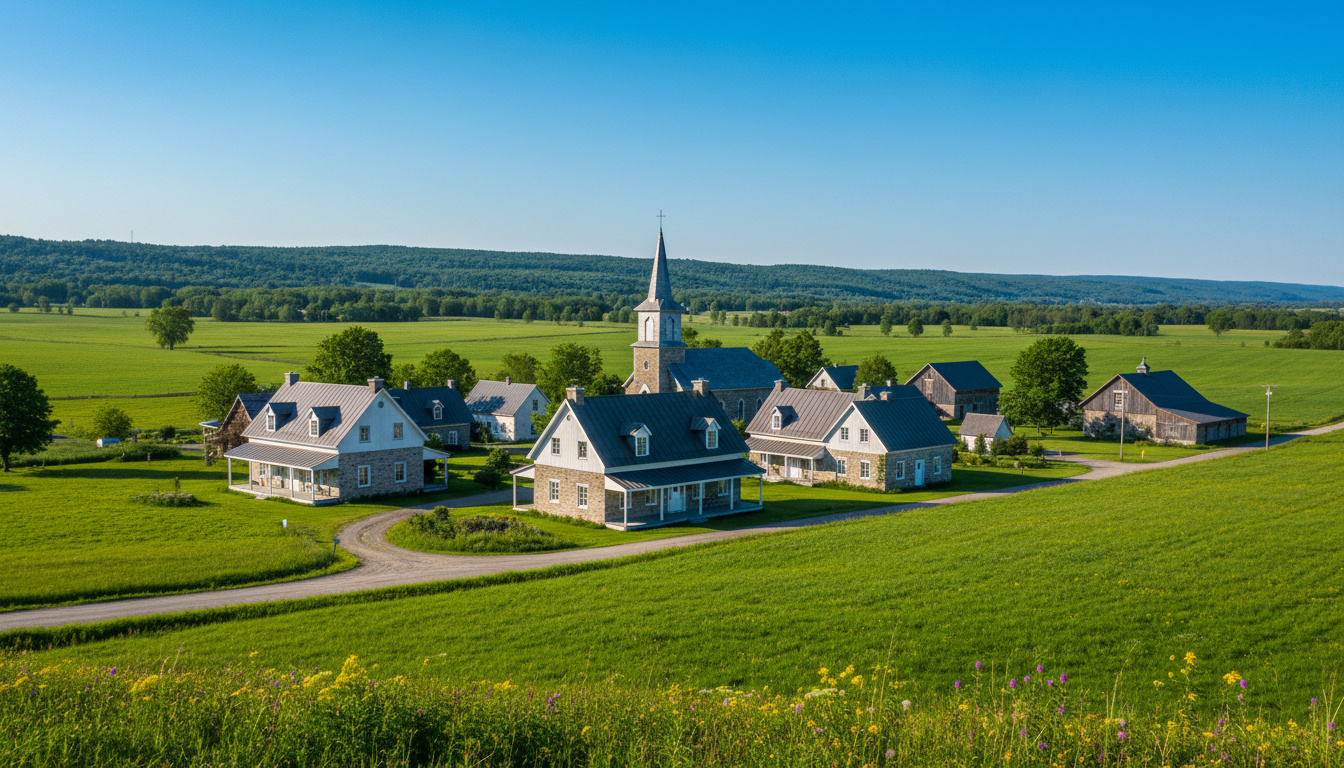

Sainte Brigitte de Laval stands as a rapidly expanding town in Quebec’s Chaudière-Appalaches region, situated within the La Jacques-Cartier Regional County Municipality north of Quebec City. The municipality has witnessed substantial demographic shifts over the past two decades, evolving from a modest parish settlement into a suburban community serving the greater Quebec City area. Its distinct Irish heritage roots and designated historic religious sites distinguish it within the regional landscape.
Once established as a 19th-century parish, the area now functions primarily as a residential suburb characterized by steady population increases and family-oriented community structures. The town’s proximity to Lac Beauport and its position within the La Jacques-Cartier RCM place it at the intersection of historical preservation and modern suburban development.
Where is Sainte Brigitte de Laval and what are its defining characteristics?
| Location | Population (2021) | Municipal Status | Key Distinction |
|---|---|---|---|
| La Jacques-Cartier RCM, Quebec | 8,588 | Town/Parish municipality | North of Quebec City, near Lac Beauport |
- Rapid expansion: Resident population nearly tripled from 3,431 in 2001 to 8,588 in 2021
- Continued growth trajectory: Projections indicate the population will exceed 10,000 by 2030
- Irish settlement heritage: 19th-century communities from Tipperary and Waterford counties established roots in the area
- Historic designation: Le calvaire du cimetière, constructed in 1960, holds status as a designated historic monument
- Steady demographic increase: Recent annual growth rates stabilize around 2% following a 4.38% surge in 2021
- Suburban economic base: Residential development drives the local economy without dominant industrial sectors
| Fact | Details | Source Type |
|---|---|---|
| 2021 Census Population | 8,588 residents | Official Statistics |
| 2026 Estimated Population | 9,384 residents | Projected Data |
| 2030 Projected Population | 10,176 residents | Projected Data |
| 2001 Census Population | 3,431 residents | Historical Records |
| 2021 Annual Growth Rate | 4.38% | Demographic Analysis |
| Regional County Municipality | La Jacques-Cartier | Administrative Data |
| Historic Religious Ensemble | Le calvaire du cimetière (1960) | Heritage Registry |
| Irish Settlement Origin | Tipperary and Waterford counties | Historical Documentation |
| Geographic Region | Chaudière-Appalaches | Regional Classification |
How has the population changed and what do projections indicate?
Demographic data reveals a consistent upward trajectory for Sainte Brigitte de Laval across multiple census periods. Between 2001 and 2016, the population climbed from 3,431 to 7,423, establishing a pattern of sustained growth that continued through the 2021 census.
Recent Census Trends
The 2021 census recorded 8,588 residents, representing an annual increase of 360 individuals and a growth rate of 4.38%. This figure marked a significant milestone in the municipality’s expansion, nearly matching the combined population increases of previous decades. The recent rate of approximately 2% annually suggests a maturing growth pattern as the community approaches medium-sized town status.
Future Population Trajectories
Statistical projections forecast continued expansion, with estimates placing the population at 9,186 by 2025 and 9,384 by 2026. Long-term models suggest the municipality will surpass 10,000 residents by 2030, reaching approximately 10,176. These figures indicate sustained demand for residential development and municipal services.
The projected addition of nearly 2,000 residents between 2021 and 2030 represents a 23% population increase, maintaining Sainte Brigitte de Laval’s position as one of the faster-growing municipalities in the Quebec City periphery.
Population figures derive from official Statistics Canada census data and demographic projections compiled through World Population Review analysis.
What is the history and heritage of Sainte Brigitte de Laval?
The municipality’s origins trace to its establishment as a parish during the 1830s, serving as a foundation for subsequent civil development. However, the area’s distinct cultural character emerged through 19th-century immigration patterns that brought specific Irish communities to the region.
Irish Settlement Patterns
Historical records document significant settlement from Irish counties Tipperary and Waterford, with families including O’Brien, Heafy, Hurley, Dawson, Bolan, Keough, Stapleton, Tierney, and Berryman establishing communities in areas adjacent to Lac Beauport and throughout what became Sainte Brigitte de Laval. These settlers arrived during the 19th century, contributing to the region’s demographic and cultural composition. Irish Heritage Quebec maintains documentation of these familial connections and settlement patterns.
Residents seeking local resources might consult the Quebec Weekly Grocery Deals Guide for regional shopping information comparable to options available in growing communities like Sainte Brigitte de Laval.
Religious and Cultural Landmarks
Le calvaire du cimetière represents a significant cultural asset within the municipality. Constructed in 1960, this Catholic religious ensemble received designation as a historic monument, recognizing its architectural and spiritual significance. The site stands as a testament to the community’s religious heritage and mid-20th-century devotional practices. Historic Places Canada lists the official registry entry for this designation.
What are the geographic and administrative characteristics?
Sainte Brigitte de Laval occupies a position within the La Jacques-Cartier Regional County Municipality, part of the broader Chaudière-Appalaches administrative region. The town sits north of Quebec City, adjacent to Lac Beauport, placing it within commuting distance of the provincial capital while maintaining distinct municipal boundaries.
Regional Context and Boundaries
As a member of the La Jacques-Cartier RCM, the town participates in a regional governance structure managing services across multiple municipalities. Geographic coordinates and specific land area measurements remain undocumented in available sources, though population density patterns align with suburban Quebec municipalities typically ranging between 200-300 residents per square kilometer.
Governance Structure
Available sources do not identify the current municipal mayor. Administrative authority operates through the town structure alongside the overarching Regional County Municipality framework. Wikidata confirms the municipality’s classification within Quebec’s administrative hierarchy.
Specific measurements for total land area, precise elevation above sea level, and current elected officials remain unavailable in published sources. Physical geography details beyond regional positioning near Lac Beauport require verification.
What is the historical timeline of development?
- — Establishment of the parish municipality
- — Arrival of Irish settler families from Tipperary and Waterford counties
- — Construction of Le calvaire du cimetière, later designated a historic monument
- — Census records 3,431 residents
- — Population reaches 7,423
- — Census records 8,588 residents with 4.38% annual growth
- — Projected population of 9,186
- — Estimated population of 9,384
- — Projected population of 10,176
What facts are verified versus unclear?
| Established Information | Uncertain or Unavailable Data |
|---|---|
| Population figures for 2001, 2016, 2021, and projections through 2030 | Specific total land area measurements |
| Membership in La Jacques-Cartier RCM | Exact elevation above sea level |
| Irish heritage from Tipperary and Waterford counties | Current mayor or municipal council composition |
| 1960 construction and historic designation of cemetery calvary | Detailed economic sector breakdowns |
| Geographic position north of Quebec City near Lac Beauport | Comprehensive census demographic breakdowns beyond Indigenous identity data |
What is the regional context of the municipality?
Sainte Brigitte de Laval functions within the expanding suburban ring surrounding Quebec City, serving as a residential destination for families seeking proximity to urban employment while maintaining separation from core city density. The town’s inclusion in the La Jacques-Cartier RCM places it within a region balancing natural resource preservation with residential development.
The local economy supports suburban residential patterns without dominant industrial or commercial sectors defining its character. This economic orientation aligns with similar communities throughout the Quebec City periphery, where bedroom-community status predominates. The municipality maintains connections to broader regional services while developing localized infrastructure to support increasing population demands.
Cultural programming related to Irish heritage, including presentations on settler families, continues through regional historical societies, maintaining links to the area’s 19th-century origins while accommodating 21st-century suburban expansion.
What do primary sources indicate about the municipality?
Historical research documents Irish settlements from Tipperary and Waterford counties, including families such as O’Brien, Heafy, Hurley, Dawson, Bolan, Keough, Stapleton, Tierney, and Berryman, who arrived in areas including Lac Beauport and Sainte Brigitte de Laval.
— Irish Heritage Quebec, The Tipperary Settlement
Le calvaire du cimetière constitutes a Catholic religious ensemble built in 1960 and designated as a historic monument, representing significant 20th-century devotional architecture.
— Historic Places Canada, Canadian Register of Historic Places
What defines Sainte Brigitte de Laval today?
The municipality currently exists as a mid-sized Quebec town experiencing sustained demographic expansion, characterized by its dual identity as a growing suburb and a community preserving 19th-century Irish settlement heritage. With population projections indicating continued growth toward the 10,000-resident threshold, Sainte Brigitte de Laval maintains its position within the La Jacques-Cartier region as a family-oriented residential area. Those interested in regional recreational activities might also consult the Canadiens de Montréal Schedule Guide for sporting events accessible from the Quebec City region.
Common Questions
Is Sainte Brigitte de Laval part of Quebec City?
No, it remains an independent municipality within the La Jacques-Cartier Regional County Municipality, located north of Quebec City.
What is the Irish connection to the town?
19th-century settlers from Tipperary and Waterford counties, including families named O’Brien, Heafy, and Hurley, established communities in the area.
How fast is the population growing?
The town grew 4.38% in 2021, with recent rates stabilizing around 2% annually, projecting 10,176 residents by 2030.
What historic sites exist there?
Le calvaire du cimetière, built in 1960 and designated a historic monument, serves as the primary registered heritage site.
What does the municipality’s name signify?
The name references Saint Brigitte of Laval, maintaining the Catholic parish tradition common to Quebec municipal naming conventions.
Are there public transportation links to Quebec City?
Specific public transit routes are not documented in available sources, though the proximity suggests regional connectivity options exist.
What is the elevation of the town?
Specific elevation data remains unavailable in published geographic sources.