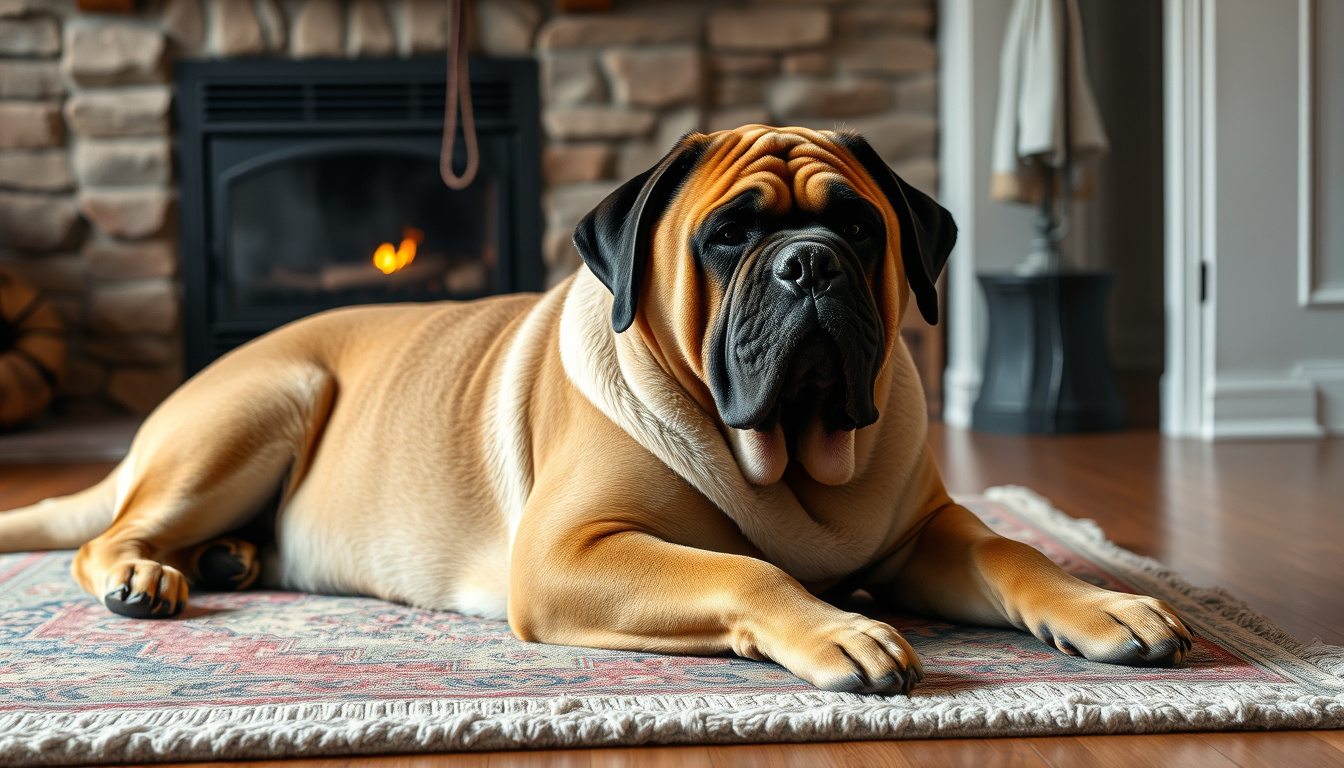
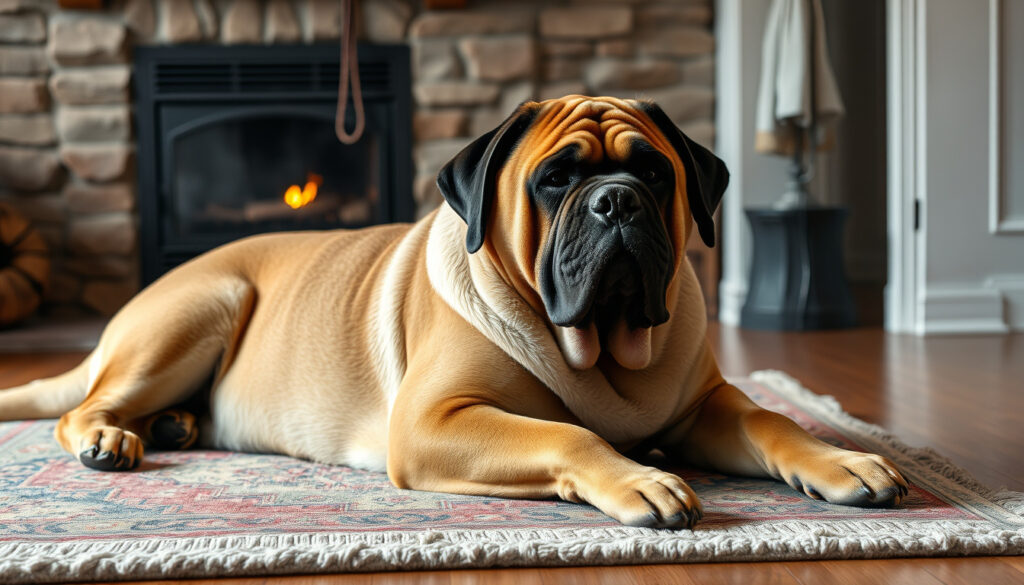
There’s something about a dog that outweighs most adults that naturally makes you ask: Is this a gentle giant or a liability? The English Mastiff, with males tipping the scales at 150 to 250 pounds according to Hill’s Pet US (pet nutrition authority), has a reputation that swings between loving family pet and historic defender.
Average weight (male): 150-250 lbs (68-113 kg) ·
Average weight (female): 120-200 lbs (54-91 kg) ·
Height at shoulder: 27.5-30+ inches (70-77+ cm) ·
Typical lifespan: 6-10 years ·
Recognized by AKC: Working Group
Quick snapshot
- English Mastiff is a British breed of mastiff type (Wikipedia (breed reference))
- Males weigh 150-250 lbs (Hill’s Pet US)
- Described as docile and dignified (Nylabone (pet care brand))
- Exact origin before 2500 BCE is unclear (Hill’s Pet US)
- Ranking in “top 3 most loyal dogs” not explicitly documented (Hill’s Pet US)
- Historical use as wolf hunter is breed lore, not verified by contemporary sources (Hill’s Pet US)
- Zorba’s 343-lb weight record is not officially recognized by AKC (Hill’s Pet US)
- Modern English Mastiff is family-oriented (Hill’s Pet US)
- Requires calm, consistent routine (Hill’s Pet US)
The breed’s official classification confirms its giant status.
| Attribute | Value |
|---|---|
| Breed Name | English Mastiff (also simply Mastiff) |
| Origin | Great Britain |
| AKC Group | Working |
| Height (male) | 27.5-30+ inches (70-77+ cm) |
| Weight (male) | 150-250 lbs (68-113 kg) |
| Life Expectancy | 6-10 years |
| Temperament | Docile, dignified, loyal, protective |
Is an English Mastiff a good family dog?
Temperament with children
According to Nylabone (pet care brand), Mastiffs are self-confident, patient, and generally good with children — but they also note that Mastiffs can become overly protective of them. The breed’s docile nature means they are unlikely to be snappy, but their sheer size (males up to 250 lbs per Hill’s Pet US) means unsupervised play with toddlers is risky simply because a heavy dog can knock a small child over without meaning to.
“A massive, heavy-boned dog of courage and prodigious strength, the Mastiff is docile and dignified but also a formidable protector.” — American Kennel Club (breed registry authority)
Space and exercise needs
Hill’s Pet US describes the Mastiff as a giant breed that prefers calm, slow-paced routines. They don’t need hours of running — a moderate walk and some yard time suffice. But they do need space: a 150+ lb dog cannot live comfortably in a small apartment. A securely fenced yard is also recommended because of their protective instincts (Nylabone).
Protective instincts
Hill’s Pet US notes that Mastiffs are affectionate protectors who attach strongly to one person while loving the whole household. This makes them excellent watchdogs but means they need early socialization to distinguish between a genuine threat and a delivery driver. The breed’s ancestral role as a farm guard dog and estate guardian (Hill’s Pet US) is still wired in.
A Mastiff will protect your family with its life, but that devotion requires you to invest in structured training from puppyhood, or you may end up managing a 200-lb bodyguard who hasn’t learned when to stand down.
Which is bigger, Cane Corso or English Mastiff?
Size comparison English Mastiff vs Cane Corso
There’s no contest in sheer mass. The English Mastiff is one of the heaviest dog breeds in the world, while the Cane Corso, though muscular and imposing, is significantly lighter. A quick look at breed standards makes the gap clear.
Four key measurements, one pattern: the Mastiff is at least 50% heavier than the Cane Corso, making it the larger breed by far.
| Breed | Height (male) | Weight (male) |
|---|---|---|
| English Mastiff | 27.5–30+ inches (Hill’s Pet US) | 150–250 lbs (Hill’s Pet US) |
| Cane Corso | 23.5–27.5 inches (Chewy (pet retailer encyclopedia)) | 88–110 lbs (Chewy) |
Weight range comparison
The English Mastiff’s weight range (male 150–250 lbs) dwarfs the Cane Corso’s (88–110 lbs). Even the largest Cane Corso barely reaches the bottom of the Mastiff’s range. The American Kennel Club (breed registry authority) confirms the Cane Corso is a large, not giant, breed, while the Mastiff is universally classified as a giant breed.
The implication: if you’re looking for a truly massive dog for presence or protection, the Mastiff wins on size alone — but the Cane Corso offers a more athletic, agile build that some owners prefer.
Are English Mastiffs considered aggressive breeds?
Aggression statistics and breed reputation
The English Mastiff is not among the breeds that top aggression lists. Nylabone describes the breed as “self-confident, patient, steady, docile,” and Hill’s Pet US calls it a “gentle giant.” Their historical role as estate guardians required controlled assertiveness, not indiscriminate aggression.
Can Mastiffs be aggressive?
Any dog can be aggressive if poorly socialized or mistreated, but the English Mastiff’s temperament standard favors docility. The breed is known for a high threshold for provocation — they tend to warn before escalating. Hill’s Pet US notes their sensitivity and recommends calm, consistent training. The real risk is under-socialized protective instinct, not inherent aggression.
Most aggressive dog breeds list
When media lists rank “most aggressive” breeds, you typically see breeds like Pit Bulls, Rottweilers, and Chihuahuas — not the English Mastiff. According to the AKC, the Cane Corso (which some consider a more aggressive mastiff-type) is actually rated “good with young children” and “good with other dogs.” The English Mastiff shares that family-friendly reputation.
“The Mastiff, once known as the Old English Mastiff, was later employed as a guard dog, a gamekeeper’s dog, and a hunter of wolves.” — Royal Kennel Club
Breed-specific legislation often targets “dangerous” breeds, but the English Mastiff rarely appears on those lists — a dog that weighs as much as a refrigerator and is known for patience, not unpredictability, poses a different liability profile than a smaller, more reactive breed.
The catch: a Mastiff’s protective instincts can be misinterpreted as aggression, but with proper socialization, they are among the least aggressive giants.
What are the top 3 most loyal dogs?
Loyalty rankings from The Spruce Pets
While the English Mastiff is known for loyalty — Hill’s Pet US describes them as affectionate protectors that attach strongly to their people — it does not appear in every “top 3” list. The Spruce Pets’ “23 Most Loyal Dog Breeds” includes breeds like Labrador Retriever, German Shepherd, and Golden Retriever in the top spots. The English Mastiff is typically listed lower, if at all, because loyalty rankings often favor breeds with high trainability and eagerness to please, not independent thinkers.
“English Mastiffs can make wonderful pets for the right family. They are known for their loyalty, affectionate nature, and protective instincts.” — TheAsherHouse (Facebook, pet community)
English Mastiff loyalty rating
Owners on social media often praise the breed’s devotion, but no authoritative ranking places the English Mastiff in the top three. Their loyalty is real but manifests as quiet, protective companionship rather than the overt following-around seen in Velcro breeds.
The trade-off: you get a dog that will stay by your side and guard your home without needing constant attention, but you won’t get the ebullient, tail-wagging enthusiasm of a Labrador — it’s a different kind of loyalty.
Could a Mastiff beat a wolf?
Mastiff vs wolf historical context
Historical records show that the English Mastiff’s ancestors were used as war dogs and estate guardians, not specialized wolf hunters. Hill’s Pet US lists “farm guard dog” and “early war dog” as their ancestral roles. The idea of a mastiff defeating a wolf is often based on the Tibetan Mastiff, a separate breed that was historically used to protect livestock from wolves and bears. For the English Mastiff, no documented accounts confirm a wolf-killing purpose.
Tibetan Mastiff vs wolf outcome
According to Nylabone, the Tibetan Mastiff is a distinct breed with a different origin. While some claim it can fight off wolves, there is no verified modern data. The English Mastiff, despite its size, lacks the speed and agility of a wolf and was never bred for that confrontation.
“The Mastiff, once known as the Old English Mastiff, was later employed as a guard dog, a gamekeeper’s dog, and a hunter of wolves.” — Royal Kennel Club
The pattern: the “wolf killer” label is a romantic exaggeration. A Mastiff’s strength is impressive, but a wolf is a wild predator with different instincts. The real historical contribution of the English Mastiff was guarding estates, not hunting wolves in the forest.
Breed specifications
Six specifications that define the English Mastiff as a giant breed:
| Specification | Value |
|---|---|
| Coat type | Short, straight, close |
| Coat colors | Apricot, fawn, brindle |
| Grooming needs | Low (weekly brushing) |
| Shedding | Moderate |
| Exercise requirement | Low to moderate |
| Drooling level | High |
| Barking tendency | Low (alert bark only) |
| Good with cats | With socialization, yes |
| Training difficulty | Moderate (stubborn streak) |
These specs underscore that the Mastiff is a low-maintenance giant but requires space and tolerance for drool.
English Mastiff: pros and cons
Upsides
- Extremely loyal and protective of family (Hill’s Pet US)
- Calm, low-energy indoors — good for houses with space
- Excellent with children when socialized (Nylabone)
- Low barking — only when necessary
Downsides
- Massive size means high food cost and space needs
- Prone to bloat and hip dysplasia (Hill’s Pet US)
- Short lifespan (6-10 years)
- Heavy drooling — not for neat freaks
The choice to own a Mastiff hinges on whether you can accommodate its size and health challenges for the reward of a loyal guardian.
English Mastiff historical timeline
Five milestones that show how the breed evolved from ancient guardian to modern companion:
| Date/Period | Event |
|---|---|
| Likely descended from Alaunt and Pugnax mastiff-type dogs (Hill’s Pet US) | |
| Used as gamekeeper’s dog, hunter of wolves, bear and boar (per breed lore, not verified) | |
| Became known as Old English Mastiff (Nylabone) | |
| AKC breed recognition (AKC) | |
| Famous English Mastiff Zorba recorded as world’s heaviest dog (343 lbs) — unverified claim |
The breed’s near-extinction in 1945 highlights its resilience and the importance of responsible breeding.
What we know and what we don’t
Confirmed facts
- English Mastiff is a British breed (Wikipedia (breed reference))
- Males 150-250 lbs (Hill’s Pet US)
- Docile and dignified (Nylabone)
- Used historically as a guard dog and estate guardian (Hill’s Pet US)
What remains unclear
- Exact outcome of a hypothetical Mastiff vs wolf fight — not documented in verifiable sources
- Explicit ranking of English Mastiff in “top 3 most loyal dogs” — not supported by breed rankings
- Precise origin before 2500 BCE (Hill’s Pet US)
- Historical use as wolf hunter is breed lore, not verified by contemporary sources
The bottom line on English Mastiff facts: their reputation as gentle giants is well-supported, but the wolf-hunting and top-loyalty claims are exaggerated or unconfirmed.
Summary
For anyone considering an English Mastiff, the decision comes down to matching the breed’s ancient guardian instincts with your modern lifestyle. They are not the heaviest dog in every category — the Irish Wolfhound is taller — but by mass they are unrivaled among companion breeds. Their loyalty is quiet and deep, their aggression profile is low, and their size alone demands respect and preparation. For a family with a large home, plenty of floor space, and a commitment to socialization, the English Mastiff can be exactly what it was bred to be: a protective, calm, and devoted companion. For everyone else, the Mount Kilimanjaro Climbing Guide or Millennial Generation: Age Range, Characteristics, Key Traits might offer a more practical challenge.
youtube.com, youtube.com, reddit.com, facebook.com, figopetinsurance.com, tasteofthewildpetfood.com, instagram.com
For a deeper dive into the breed’s history and care requirements, refer to this complete English Mastiff owners guide.
Frequently asked questions
Are English Mastiffs good with children?
Yes, when properly socialized. Nylabone reports they are great with children but warns they can become overly protective. Supervision is recommended due to the dog’s size.
How much does an English Mastiff cost?
Prices vary widely. From reputable breeders, expect $1,500–$3,000 USD for a puppy. Adoption fees are lower. Ongoing costs (food, vet care) are high due to the breed’s size.
Do English Mastiffs shed a lot?
Moderately. They have a short, straight coat that sheds year-round. Weekly brushing helps control loose hair.
How much exercise does an English Mastiff need?
Low to moderate. A daily walk and some playtime in a yard are sufficient. They are not high-energy dogs and adapt well to calm households.
Are English Mastiffs easy to train?
Training is moderate — they can be stubborn. Positive reinforcement works best. Early socialization and consistency are key.
What are common health problems in English Mastiffs?
Hip dysplasia, elbow dysplasia, bloat (gastric torsion), eye issues (ectropion, entropion), and heart conditions (cardiomyopathy) are common. Regular vet checkups are essential.
Related stories




Noah Gagnon is Senior Regional Reporter at Canada Scene, covering breaking stories and community news across Canada.