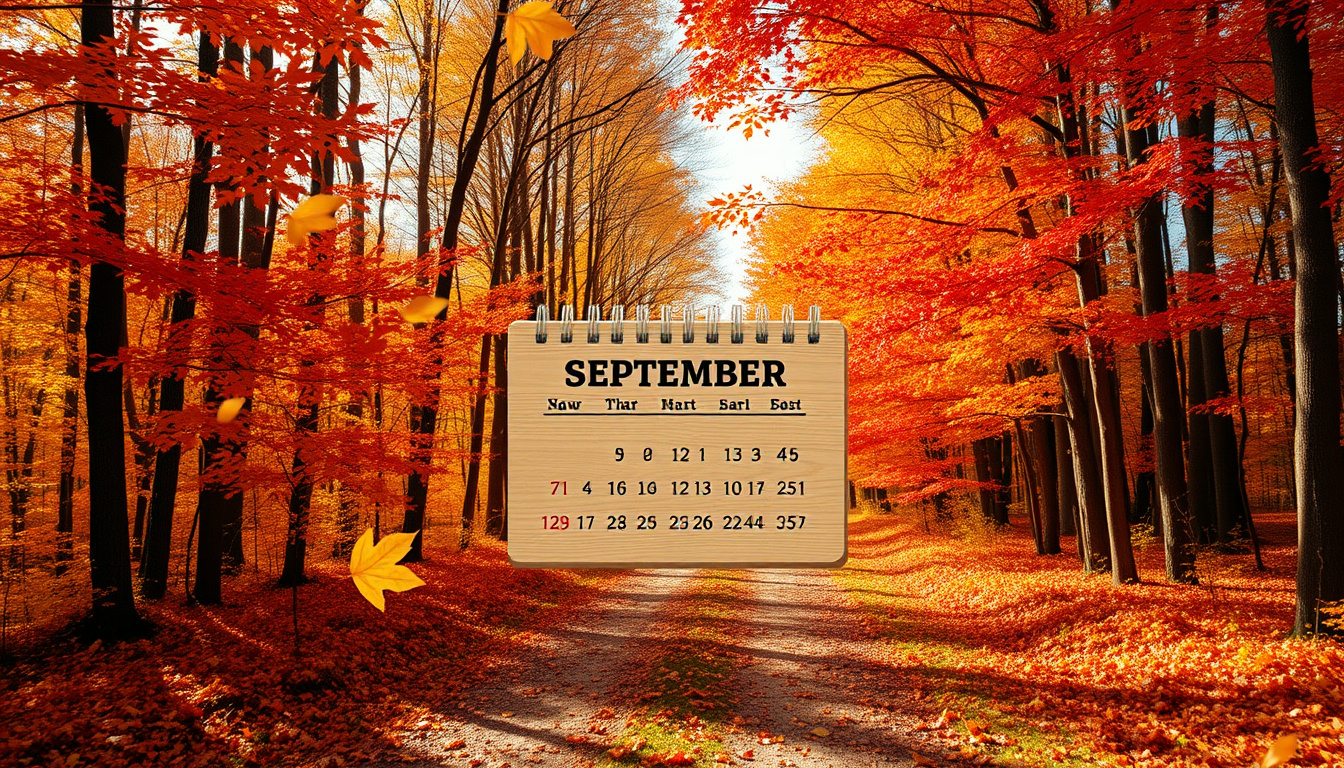

Fall, also known as autumn, marks one of the most anticipated transitions of the year. Yet pinpointing its official start depends entirely on which system is used to define the season. Two distinct methods exist: the astronomical approach, rooted in Earth’s position in space, and the meteorological approach, designed around climate data consistency. Both frameworks produce different dates, and understanding the distinction helps clarify what “the first day of fall” actually means.
In the Northern Hemisphere, the autumnal equinox typically falls between September 21 and September 23, while meteorological fall consistently begins on September 1 and concludes at the end of November. The timing of these transitions varies slightly from year to year, influenced by the shape of Earth’s orbit and the presence of leap years. Meanwhile, the opposite side of the globe experiences the reverse: the September equinox signals spring’s arrival south of the equator.
This guide breaks down the precise dates, the reasoning behind each system, and what to expect for the coming years.
When Does Fall Start in 2024?
For 2024, astronomical autumn arrived on September 22 at 11:50 UTC, a moment captured through satellite imagery by NOAA’s GOES-19. Meteorological autumn, by contrast, began three weeks earlier on September 1, following its fixed annual schedule. The gap between these two dates reflects fundamentally different purposes: one follows the sun, the other follows the thermometer.
4-Item Overview
Key Insights
- The autumnal equinox occurs when day and night are roughly equal in length, though the exact balance varies by latitude
- Astronomical dates shift annually because Earth’s orbit is elliptical, not perfectly circular
- Leap years nudge the equinox date forward or backward by roughly one day in any given year
- Meteorological seasons exist specifically to keep weather statistics consistent across decades
- NOAA’s GOES-19 satellite directly observed both the 2024 and 2025 equinoxes from orbit
- The September equinox marks opposite seasons in the two hemispheres—autumn north, spring south
- At higher latitudes, daylight on equinox day exceeds 12 hours by several minutes
Snapshot of Definitions
| Definition | Start Date | End Date | Notes |
|---|---|---|---|
| Astronomical Fall | Autumnal equinox | Winter solstice | Precise UTC time varies each year |
| Meteorological Fall | September 1 | November 30 | Fixed dates for statistical consistency |
| Southern Hemisphere | March equinox | June solstice | Seasons are completely reversed |
Astronomical vs. Meteorological Fall: Key Differences
Astronomical seasons derive from Earth’s axial tilt of approximately 23.5 degrees relative to its orbital plane. When the Northern Hemisphere tilts away from the sun, temperatures drop and daylight shortens—triggering the transition into autumn. The defining moments are the equinoxes, when the sun crosses the celestial equator, and the solstices, marking the year’s longest and shortest days.
Meteorological seasons sidestep the complexity of celestial mechanics. Rather than waiting for an exact astronomical moment, meteorologists assigned each season a fixed three-month block. Fall begins September 1 and ends November 30, mirroring the months during which temperatures most consistently decline. This system makes it far easier to compare weather data year over year without accounting for shifting calendar dates.
Why Two Systems Exist
The coexistence of both systems reflects a practical divide between science and daily life. Astronomers need precise orbital positions to study Earth’s relationship with the sun. Weather professionals need consistent date ranges to build reliable climate records. For most people, the distinction rarely matters—until someone asks, “so when does fall actually start?”
At the equator, the equinox produces nearly exactly 12 hours of daylight. At 60 degrees north latitude, the balance tips to roughly 12 hours and 16 minutes. Latitude directly influences how noticeably the equinox affects day length in any given location.
The Equinox in Detail
The word “equinox” comes from the Latin for “equal night,” referring to the approximate balance of daylight and darkness. However, true equality occurs only at the equator. Moving toward the poles, daylight hours on the equinox exceed the nighttime by several minutes. The sun crosses the celestial equator moving southward, a moment that astronomers track to fractions of a second.
The NOAA Satellite Operations Facility tracked the 2024 equinox using real-time imagery from NOAA’s GOES-19 satellite, one of several instruments designed to monitor Earth’s atmospheric and surface conditions with precision.
When Does Fall Start in the Northern vs. Southern Hemisphere?
Seasons operate in reverse between the two hemispheres. When the Northern Hemisphere tilts into autumn, the Southern Hemisphere tilts toward spring. The September equinox triggers that southern shift, bringing increasing daylight and warming temperatures to countries like Australia, South Africa, and Argentina.
Conversely, the March equinox—commonly associated with spring in the Northern Hemisphere—marks the start of autumn south of the equator. This symmetry means that any discussion of “fall start dates” must specify a hemisphere to hold meaning.
Regional Seasonal Patterns
Climate varies enormously within both hemispheres. Northern Hemisphere autumn brings foliage changes in temperate zones, harvest preparations in agricultural regions, and gradually cooling temperatures across North America, Europe, and much of Asia. Southern Hemisphere autumn, occurring during the March-to-June period, affects regions where different crops grow and weather patterns follow distinct oceanic rhythms.
Northern Hemisphere fall spans the September equinox to the December solstice. Southern Hemisphere fall spans the March equinox to the June solstice. The two periods do not overlap.
When Does Fall End?
Astronomical fall ends at the winter solstice, which in the Northern Hemisphere typically falls on December 21. The precise moment varies slightly year to year—sometimes arriving on December 20 or 22—but December 21 remains the standard anchor date. In 2025, the solstice occurs at approximately 10:03 a.m. EST.
Meteorological fall ends on a fixed date: November 30. This means meteorological winter begins December 1, giving weather professionals a clean three-month division. The resulting mismatch with astronomical dates can create confusion, particularly near the end of November when some calendars show fall continuing for weeks while others have already moved into winter territory.
Looking Ahead to Winter
The winter solstice marks the moment when the Northern Hemisphere reaches maximum tilt away from the sun. Daylight hours reach their annual minimum, after which days begin to lengthen once more. For those interested in planning seasonal activities, knowing both the meteorological and astronomical boundaries provides flexibility in how the year is structured.
Equinox Dates Across Coming Years
Astronomical autumn does not adhere to the same calendar date every year. The combination of Earth’s elliptical orbit and the presence of leap years causes the equinox to drift forward and backward by a day or two. Below is a summary of dates for the near term.
- 2024 — September 22 at 11:50 UTC
- 2025 — September 22 at 14:19 EDT (18:19 UTC)
- 2026 — September 22 at 19:05 EDT (September 23 at 1:06 a.m. BST)
These times are derived from data published by the National Environmental Satellite Data and Information Service and cross-referenced against multiple astronomical databases. The winter solstice following each equinox arrives consistently around December 21, though the precise minute shifts annually.
What We Know — and What Remains Uncertain
- Meteorological fall starts September 1 every year
- Astronomical fall begins on the September equinox
- The equinox typically falls September 22 or 23 in recent years
- NOAA satellites directly observe equinox timing
- Seasons are reversed between hemispheres
- Exact UTC time of the equinox shifts annually
- Occasional September 21 occurrence in some years
- Solstice can occasionally fall on December 20 or 22
- Local daylight hours depend on precise latitude
- Regional climate patterns may delay seasonal onset
The Bigger Picture: Why Seasons Matter
Beyond marking a change in temperature, the transition into fall carries cultural, agricultural, and economic weight. Harvest festivals from Thanksgiving in the United States to the Moon Festival in East Asia align with the season’s peak productivity. Farmers depend on seasonal timing for planting and harvesting cycles. Sports calendars—including questions like When Does the Olympics Start—factor seasonal transitions into scheduling decisions.
Meteorologists rely on fixed seasonal boundaries to track climate trends over decades. When comparing October temperatures across 30 years, for instance, it helps enormously to know that the date range used for “October” never shifts. Astronomical boundaries, while more variable, provide a consistent astronomical reference frame that links directly to Earth’s orientation in space.
The two systems serve different audiences. Neither is wrong. The key is knowing which one applies to the question at hand. For weather forecasting and record-keeping, September 1 is fall. For astronomy and celestial navigation, the equinox is the true marker.
Sources and Expert Perspectives
Meteorological seasons align with the temperature cycle, giving us a consistent framework for comparing weather data year after year.
— NOAA, on the reasoning behind fixed seasonal dates
The equinox marks one of two moments each year when the sun crosses the celestial equator, producing nearly equal day and night.
— NASA, describing the astronomical significance of equinoxes
Data for recent and upcoming equinoxes was obtained from NOAA’s Satellite Operations, with cross-referencing from AccuWeather, the National Weather Service, and the Royal Museums Greenwich. Additional astronomical timing data came from Espace pour la Vie.
Summary
Fall officially starts on September 1 under the meteorological system and on the September equinox—typically September 22 or 23—under the astronomical system. For 2024, astronomical autumn began September 22 at 11:50 UTC, as documented by NOAA’s satellite network. Meteorologically, the season had already started three weeks earlier. The Northern and Southern Hemispheres experience opposite seasonal timing, with the September equinox marking spring south of the equator. Understanding both frameworks eliminates confusion and provides the clearest answer to the question: it depends on which definition is being used.
Frequently Asked Questions
When does autumn officially begin?
By the astronomical definition, autumn begins on the September equinox, which typically falls between September 21 and 23. By the meteorological definition, it begins on September 1 every year.
What date is the autumnal equinox?
The equinox date varies by year. Recent years show September 22 as the most common date, with occasional shifts to September 21 or 23 depending on leap years and Earth’s orbital position.
Does fall start on September 22?
In 2024, 2025, and 2026, astronomical fall began or will begin on September 22. The specific time is measured to fractions of a minute and expressed in UTC.
What is the difference between astronomical and meteorological fall?
Astronomical fall follows the Earth’s tilt and orbital position, tied to the equinox and solstice. Meteorological fall uses fixed calendar dates to match temperature patterns, making it easier to compare seasonal data over time.
When does fall start in the Southern Hemisphere?
South of the equator, the March equinox marks the start of autumn, and the season concludes at the June solstice. The timing is the reverse of the Northern Hemisphere.
When does fall end?
Astronomical fall ends at the winter solstice, around December 21. Meteorological fall ends on November 30, making December 1 the start of meteorological winter.
Why do equinox dates change each year?
Earth’s orbit around the sun takes approximately 365.25 days. Leap years and the elliptical shape of Earth’s orbit cause the equinox timing to shift slightly each year, occasionally pushing the date to September 21 or 23.
Related stories



Jessica Morin covers provincial policy, regional economics and public affairs across Canada.