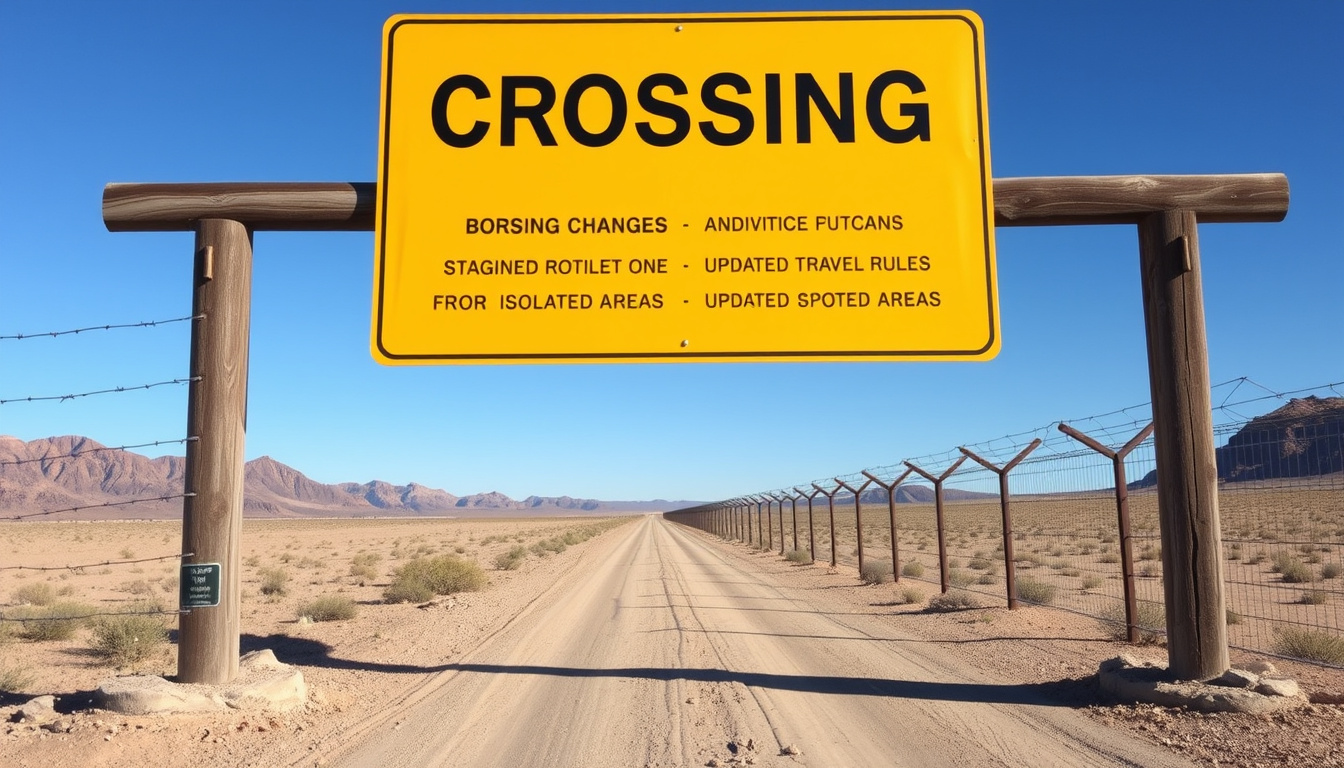
Canada is preparing to overhaul how travelers enter the country through remote border areas, marking the most significant shift in northern cross-border movement in decades. The Canada Border Services Agency will replace the Remote Area Border Crossing Program with a telephone-based reporting system beginning September 14, 2026, affecting thousands of boaters, anglers, and cottage owners who regularly traverse isolated sections of the Canada-U.S. frontier.
The change ends a long-standing arrangement that allowed pre-approved low-risk travelers to enter Canada at specified remote locations without visiting an official port of entry. While existing permits remain valid through September 13, 2026, no new applications are being accepted, and the CBSA is now consulting with Indigenous communities, local businesses, and law enforcement to determine where telephone reporting sites will operate.
The policy shift stems from the CBSA’s effort to strengthen border security and bring Canadian reporting practices in line with how U.S. officials handle remote entries. Travelers who routinely crossed at locations such as the Northwest Angle or along Lake of the Woods will need to adjust their planning well before the transition takes effect.
What are the recent changes to remote area border crossings?
The CBSA announced the phaseout of the Remote Area Border Crossing Program in early 2024, initiating a wind-down period that will culminate in the complete replacement of the permit system with mandatory telephone reporting. Under the new framework, all travelers entering Canada through remote areas will be required to report their arrival either in person at a port of entry or by calling a designated telephone reporting site.
Shift from permit-based entry to mandatory telephone or in-person reporting
Remote border zones across northwestern Ontario and Manitoba
September 14, 2026, when new reporting requirements take full effect
Canada Border Services Agency policy directive
Unlike the previous system, which restricted participation to screened Canadian and American citizens as well as permanent residents, the incoming framework will be open to all travelers. The trade-off is that everyone must complete formal reporting rather than relying on the honor system that underpinned the permit program. The CBSA has emphasized that the change addresses gaps in verification and ensures consistent compliance with Canadian immigration and customs laws.
- Permit applications are no longer accepted as of the announcement date
- Existing permits retain validity through 11:59 p.m. on September 13, 2026
- All remote entries must be reported via telephone or at a port of entry from September 14, 2026
- The new system eliminates screening requirements but introduces mandatory reporting obligations
- Open-water travel remains exempt when no land, dock, or goods exchange occurs
| Fact | Details | Source |
|---|---|---|
| Program wind-down date | September 14, 2026 | CBSA official website |
| Permit expiration | 11:59 p.m. September 13, 2026 | CBSA official website |
| Eligible nationalities (old) | Canadian/U.S. citizens and permanent residents only | CBSA program documentation |
| Eligible nationalities (new) | All travelers, with reporting required | CBSA announcement |
| Open-water exemption | No reporting needed if no land or dock contact | Lake of the Woods area reporting |
Which remote areas are affected by these border crossing updates?
The Remote Area Border Crossing Program covered five distinct zones along the Canada-U.S. border, primarily in northwestern Ontario and southern Manitoba. These areas share a common characteristic: they lie outside reasonable driving distance from any port of entry, making traditional border crossing impractical for residents and regular visitors.
Northwest Angle and Lake of the Woods region
Perhaps the most well-known affected area is the Northwest Angle, a small chunk of Minnesota that juts into Canadian waters north of Lake of the Woods. Travelers crossing from this area into southern Manitoba have long relied on the RABC program, as the nearest land-based port of entry could involve a significant detour. The changes will require boaters and anglers to either stop at a designated telephone site or travel to an official crossing point, disrupting routines that have existed for years.
The CBSA has confirmed that open-water navigation remains unaffected by the policy change. Travelers who cross Canadian waters without touching land, docking, anchoring, mooring, or exchanging goods do not need to report, regardless of whether they hold a valid permit. This exemption applies both before and after September 14, 2026.
Pigeon River to Lake of the Woods corridor
This western Ontario corridor stretches from the Pigeon River crossing point westward through remote wilderness to Lake of the Woods. The area includes numerous seasonal properties and recreational routes that see regular cross-border traffic. Local businesses and Indigenous communities in this region have raised concerns about the economic and practical implications of the transition, prompting the CBSA to include them in the ongoing consultation process.
Canadian shore of Lake Superior
The remote northern shore of Lake Superior presents unique challenges for border enforcement due to its isolation and limited accessibility. Small communities and crown jewel provincial parks in this area have historically benefited from flexible crossing arrangements. The new telephone reporting system aims to maintain security while accommodating the realities of travel in this rugged landscape.
Sault Ste. Marie upper lock system
The Sault Ste. Marie canal and lock system provides a waterway connection that crosses the international boundary in Michigan’s Upper Peninsula. Travelers using this route for recreational purposes will need to comply with the new reporting requirements, though the CBSA has indicated that specifics regarding telephone site locations and operating hours remain under development.
Cockburn Island
This isolated island in Lake Huron, accessible only by boat or aircraft, has a small permanent population and seasonal visitors who frequently cross the border as part of their travel plans. The CBSA’s decision to end the permit program means island residents and visitors must establish new routines for compliance before the September 2026 deadline.
What are the new requirements for crossing in remote border sectors?
Travelers entering Canada through designated remote areas after September 13, 2026, must complete border reporting through one of two methods. The preferred option for many will be the telephone reporting system, which the CBSA is currently developing in consultation with affected communities. Alternatively, travelers may report in person at any official port of entry, though this may involve significant detours from certain remote locations.
Telephone reporting procedures
The CBSA has outlined what information travelers must provide during their telephone report, though specific phone numbers and operating hours for reporting sites have not yet been released. Those calling will need to confirm their identity and citizenship status, provide details about their entry point and travel route, declare any goods being brought into Canada, and answer questions about admissibility, including whether they have ever been refused entry to any country or have relevant criminal convictions.
The CBSA has not yet published final telephone reporting site locations, phone numbers, or hours of operation. Travelers should monitor the agency’s official communications for authoritative guidance rather than relying on unofficial sources, which may contain inaccurate or outdated information.
Who must report under the new system
Unlike the previous permit program, which limited participation to screened Canadian and American citizens and permanent residents, the new telephone reporting system will be open to all travelers regardless of nationality. The trade-off is that everyone must complete the reporting process before or immediately upon entering Canada through a remote area. This broader eligibility represents a significant shift in how the CBSA approaches remote border enforcement, moving from selective screening to universal reporting.
Open-water exemptions
The CBSA has clarified that certain travel patterns remain exempt from reporting requirements under the new system. Vessels passing through Canadian waters without stopping, anchoring, mooring, or making contact with land do not need to report, even if they technically cross the international boundary. Similarly, there is no reporting obligation when no goods are being transported or exchanged. This exemption applies to direct through-transit in open water, such as travel between points in the United States that passes through Canadian waters without interruption.
Timeline of the Remote Area Border Crossing program transition
The wind-down of the RABC program follows a deliberate timeline designed to give travelers adequate notice while allowing the CBSA to establish the infrastructure needed for telephone reporting. The following key dates mark the progression of this policy change.
- Announcement date: The CBSA publicly announced the discontinuation of the RABC program and the transition to telephone reporting, initiating a consultation period.
- Application closure: The CBSA stopped accepting new RABC permit applications, signaling the beginning of the end for the permit-based system.
- Consultation period: The CBSA opened public input on telephone reporting site locations, seeking feedback from Indigenous communities, local businesses, and law enforcement agencies.
- Permit expiration: All existing RABC permits expire at 11:59 p.m. Eastern Time on September 13, 2026, marking the end of the old system.
- New system activation: Telephone reporting becomes mandatory for all remote entries effective September 14, 2026, replacing the permit framework entirely.
What is confirmed and what remains unclear about these changes?
While the broad strokes of the policy transition are established, several specifics remain in development. Travelers should understand what is definitively known versus what the CBSA has yet to finalize.
| Established information | Information that remains unclear |
|---|---|
| Program discontinuation date of September 14, 2026 | Exact locations of telephone reporting sites |
| Existing permits valid through September 13, 2026 | Phone numbers for reporting sites |
| Open-water exemption criteria unchanged | Operating hours of telephone reporting services |
| Information required during telephone report | Availability of multilingual reporting options |
| Affected remote area locations | Procedures for travelers without cellular service |
The CBSA has been clear that the rationale behind these changes involves strengthening border security and aligning Canadian practices with U.S. remote entry procedures. What remains less certain are the practical logistics of how the new system will function on the ground, particularly for travelers in areas with limited cellular coverage or during seasons when telephone access may be difficult.
Why is Canada changing its remote border crossing policies?
The decision to end the Remote Area Border Crossing Program reflects a deliberate policy choice by the CBSA to modernize border enforcement in remote areas. The permit system, which relied heavily on traveler honesty and self-declaration, created vulnerabilities that agency officials determined could no longer be acceptable given evolving security concerns.
The CBSA has stated that the new telephone reporting framework will enable real-time verification of traveler information rather than depending on pre-screened permits and self-reported compliance. This approach mirrors how U.S. Customs and Border Protection handles remote entries into the United States, creating greater symmetry between the two countries’ approaches to cross-border travel in isolated regions.
The policy shift also responds to broader trends in border management that emphasize accountability and documentation over the trust-based systems that characterized earlier eras of cross-border cooperation. Communities along the northern frontier, including Indigenous groups with deep historical ties to border-spanning territories, have been invited to participate in determining how the new system will operate locally.
What are the official sources for these border crossing changes?
The Canada Border Services Agency serves as the primary authoritative source for information about the Remote Area Border Crossing Program transition. The agency’s official website contains program documentation, announcements, and future updates as they become available.
Regional news outlets in border communities, including Up North Live and the Settler, have covered the announcement and its implications for local residents and businesses. Coverage from Lake of the Woods media has provided detailed analysis of how the changes will affect recreational boaters and the regional tourism economy.
Travelers seeking the most current information should consult the CBSA RABC program page directly, as the agency continues to release details about telephone reporting site locations and procedures. Unofficial sources may contain inaccurate or outdated information, according to guidance from regional news outlets covering the transition.
What do travelers need to know about upcoming remote border crossing changes?
The wind-down of Canada’s Remote Area Border Crossing Program represents a fundamental change in how the country manages entries through isolated frontier areas. Travelers who have relied on RABC permits should begin planning for the transition well in advance of September 2026, particularly those who regularly cross at locations such as the Northwest Angle, Lake of the Woods, or along the remote shores of Lake Superior.
The most important takeaway is that existing permits remain valid until September 13, 2026, and no immediate action is required. However, the CBSA will not accept new applications, so those who might benefit from permits in the future should explore alternative arrangements. Open-water travel remains exempt from reporting, which means many recreational boaters and anglers may continue unchanged if they avoid land contact, docking, or goods exchange.
For those who will need to use the new telephone reporting system, patience may be required. The CBSA has not yet released complete details about where reporting sites will be located, what phone numbers to use, or what hours services will be available. Monitoring official agency communications and regional news sources will be essential as the September 2026 transition date approaches. Historical cross-border arrangements, including those that emerged following the War of 1812 outcome, demonstrate that border policies evolve in response to changing circumstances, and travelers who stay informed will adapt most successfully.
Frequently asked questions about remote border crossing changes
When exactly do the RABC permit changes take effect?
The Remote Area Border Crossing Program will officially end on September 14, 2026. Existing permits remain valid until 11:59 p.m. Eastern Time on September 13, 2026.
Can I still apply for an RABC permit?
No. The CBSA stopped accepting new RABC permit applications following the announcement of the program discontinuation.
Do I need to report if I am traveling through Canadian waters by boat without stopping?
No. Open-water travel that involves no land contact, docking, anchoring, mooring, or goods exchange remains exempt from reporting requirements under both the old and new systems.
What information must I provide during a telephone report?
Travelers must provide identity and citizenship information, entry point and route details, goods declarations, and admissibility information including any prior entry refusals or criminal convictions.
Where will the new telephone reporting sites be located?
The CBSA has not yet finalized telephone reporting site locations. The agency is consulting with Indigenous communities, local businesses, and law enforcement to determine where sites will operate.
How does this change affect American citizens traveling to Canada?
American citizens who previously qualified for RABC permits will need to use the new telephone reporting system after September 13, 2026. Unlike the old system, there will be no screening requirement, but formal reporting will be mandatory.
Are there any exemptions for cottage owners in remote areas?
Cottage owners and seasonal residents must comply with the new reporting requirements when entering Canada through remote areas. Open-water exemptions apply only when no land contact occurs.
Where can I find the most current official information?
The CBSA official website contains program information and updates. Travelers should monitor this source as details about telephone reporting sites are released.
Related stories





Catherine Roy is Editor-in-Chief at Canada Scene, overseeing editorial policy, corrections, standards and publication decisions across Canadian news and culture coverage.